Facial Overfill Syndrome
: The reality of over-injection, lumpy fillers, filler cording, and product migration—when beauty exceeds its limits and compromises natural harmony.

Table of Contents

What is Facial Overfilled Syndrome (FOS)?

Facial Overfilled Syndrome (FOS): When Beauty Exceeds Proportion

Facial Overfilled Syndrome (FOS) is an unintended outcome resulting from the administration of excessive dermal filler volume. Instead of delivering a naturally refreshed and youthful enhancement, over-injection distorts the face’s natural balance and original identity. This leaves the facial features looking unnaturally puffy, distorted, stiff, and in some cases, noticeably older than before.

The FOS Checklist: Signs of an Overfilled Face

If you or someone you know exhibits any of the following characteristics, it may be a clear indication of filler overfill:

  • “Pillow Face” (Over-projected Cheeks): The cheeks and cheekbones appear excessively full, round, and dense, causing the mid-face to look disproportionately puffy and heavy.

  • A Forced, Unnatural Smile: During facial animation or smiling, the facial muscles appear restricted and tight. The cheeks elevate excessively, crowding the eye area and making the eyes look unnaturally small.

  • Loss of Facial Dimension & Rigidity: The natural Golden Ratio of the face disappears. The facial architecture looks flat, widened, and rigid, completely losing its soft, organic contours.

  • “Duck Lips” (Over-augmented Lips): The lips become excessively thick and protrude forward dramatically, throwing off the harmony of the lower face.

  • An Overly Sharp or Projecting Chin: The chin shape appears artificial, failing to seamlessly connect or blend with the jawline and overall facial frame.

Primary Causes of an Overfilled Face

  1. The “More is Better” Misconception refers to the tendency to inject too much filler into one area, expecting immediate and dramatic changes. This approach can lead to unnatural results and discomfort.
  2. Chasing Beauty Trends highlights the issue of following temporary aesthetic fads, like the overly plump cheeks seen in Korean beauty or the pronounced features favored in Western styles. These trends may not align with one’s natural bone structure, resulting in a disconnect between appearance and individuality.
  3. Inadequate Physician Technique & Experience emphasizes the risks of choosing practitioners who may not have sufficient training or understanding of facial anatomy. This lack of expertise can result in miscalculating the amount of filler needed, which can compromise the overall outcome.
  4. Lastly, Excessive Re-treatment Frequency involves getting filler injections too soon, before the previous injections have dissolved fully. This can lead to an unnatural look due to the accumulation of product over time, making the face appear overly filled and swollen.
 

Guidelines for Correcting and Preventing Overfill Syndrome

How to Correct Overfill Syndrome

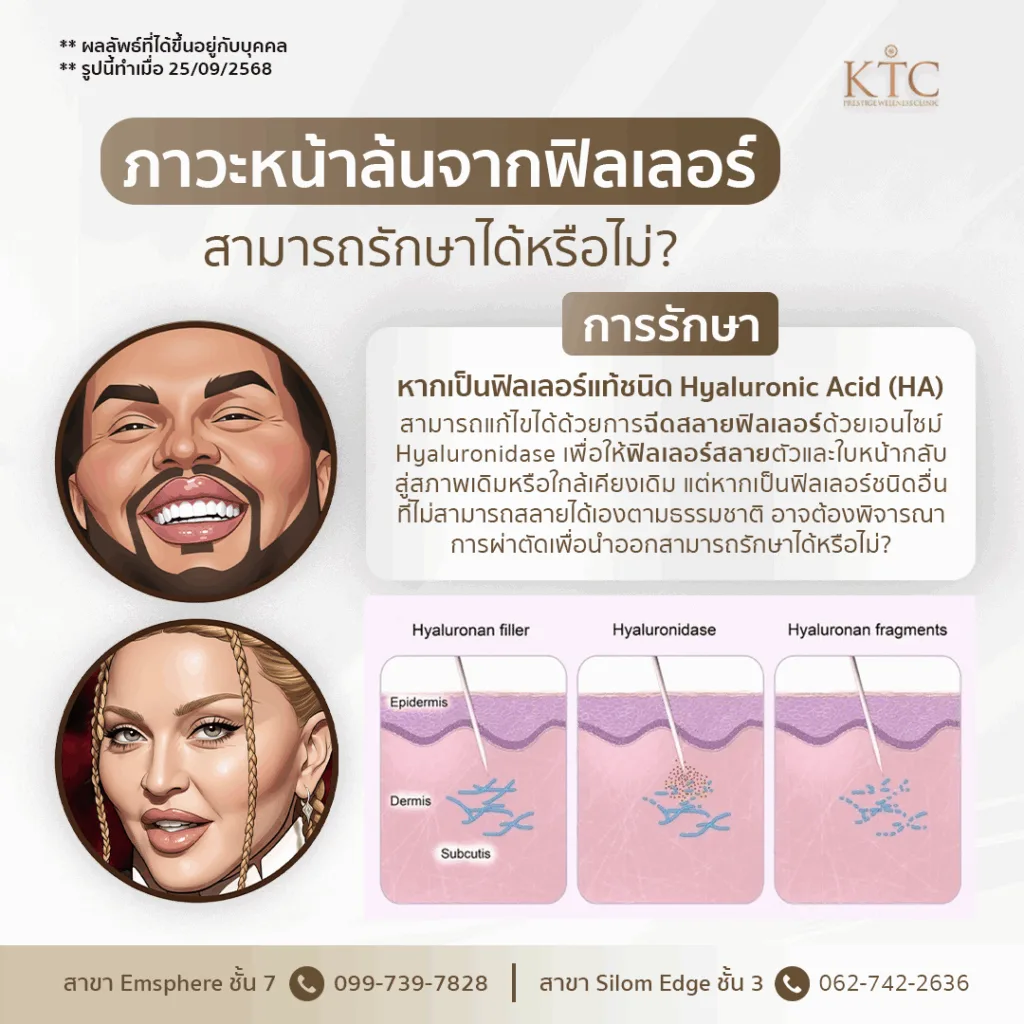
  • For Hyaluronic Acid (HA) Fillers, an injection of the specialized enzyme Hyaluronidase can be used to effectively dissolve and clear excess filler. This procedure should only be conducted by a qualified physician to ensure safety and precision.
  • In cases where the filler is only mildly excessive, patients may choose to wait for the filler to degrade naturally over time, allowing for a gradual resolution without intervention.
  • Correcting permanent fillers, however, is more difficult and often requires surgical removal or curettage (scraping) to extract the material. This process involves significantly higher risks of complications compared to managing HA fillers.
 

Preventing Overfill Syndrome (The Ultimate Key)

  • The “Less is More” Philosophy emphasizes starting with a conservative, minimal volume of filler first. This allows the results to settle properly before any further treatment decision is made. It’s important to evaluate the clinical outcome during a follow-up session before considering adding more.
  • Selecting an experienced physician is crucial. Look for a practitioner who deeply understands facial aesthetics and can create a personalized treatment plan tailored to your anatomy. It’s essential to work with someone who has the ethical integrity to advise against further treatment if it undermines your natural beauty.
  • Clear and transparent communication is key. Be upfront about your aesthetic goals while being open to your physician’s expert advice. This collaboration helps find the perfect, balanced outcome.
  • Finally, embrace your unique features. Authentic beauty means enhancing your natural characteristics rather than trying to imitate someone else. Celebrate and elevate your distinctive features instead of completely altering your identity.

Filler Dissolution for Treating Facial Overfilled Syndrome

  • Facial Overfilled Syndrome (FOS), commonly known as an “overfilled face,” occurs when dermal fillers are injected excessively or accumulate over multiple sessions. This causes the face to look swollen, heavy, and unnatural, ultimately distorting original facial proportions.

Common Symptoms of Facial Overfilled Syndrome (FOS)

  • Puffy, swollen, or distorted facial contours.

  • Loss of facial dimension; key shadows, the nasolabial folds, and original facial angles disappear.

  • Unnatural or restricted facial expressions during animation.

  • Presence of palpable nodules or hard lumps beneath the skin.

What Causes Lumpy Fillers?

Lumpy fillers are a common post-treatment issue that many people experience, characterized by palpable nodules, hardened areas, or visible bumps beneath the skin. Some individuals may notice these imperfections immediately after their session, while others may observe them becoming more pronounced over time.

Typically, filler lumpiness arises from a combination of factors, including:

  • Inappropriate Injection Depth: This occurs when the filler is placed into an incorrect tissue layer.
  • Uneven Product Distribution: The filler may fail to integrate smoothly within the skin, leading to irregularities.
  • Improper Filler Selection: Using a filler with the wrong viscosity or density for a particular anatomical area can contribute to lumpiness.
  • Over-injection: Delivering too much filler into a specific area can cause lumps to form.

If left unresolved for an extended period, lumpy fillers can lead to an uneven facial contour, irregular skin texture, and a potential decline in personal confidence. It’s essential to address these issues promptly with a qualified professional to restore a smooth and natural appearance.

What are Filler Ropes/Cords, and Are They Dangerous?

Filler cording is a condition characterized by visible, elongated lines or raised tracks of filler running beneath the skin. This issue is most frequently observed in delicate areas with inherently thin skin, such as the under-eye region (tear troughs), nasolabial folds, or temples.
 
The main clinical factors contributing to filler cording typically include:
  • Superficial Product Placement: This occurs when filler is injected into a tissue layer that is too shallow or too close to the skin’s surface.
  • Improper Product Selection: Using a filler variant that is too rigid or has a high water-binding capacity (hydrophilicity) in delicate areas can lead to issues.
  • Anatomical Over-saturation: Introducing a volume of filler that exceeds the patient’s existing skin thickness and underlying structural capacity can also be a factor.

While filler cording generally does not pose any health risks, it can present a significant aesthetic concern. Therefore, it is highly recommended to have the condition evaluated by a qualified physician to create a precise, tailored corrective plan.

What Causes Filler Migration?

Filler migration is a condition where the dermal filler shifts or moves away from its original injection site. This unintended displacement can result in a puffy, asymmetrical, or distorted appearance, deviating from the desired aesthetic outcome.
 
The most common causes of filler migration include:
  • Over-injection: Using too much filler can overwhelm the targeted tissue, leading to migration.
  • Improper Filler Selection: Choosing a filler with a high water-binding capacity (hydrophilicity) for an inappropriate anatomical area can contribute to migration.
  • Compromised Structural Support: If the existing skin and tissue structures lack the strength or integrity to hold the filler securely, migration is more likely to occur.

Filler migration often occurs in dynamic facial areas, such as the cheeks, under-eyes, and nasolabial folds. It’s crucial to seek prompt medical correction to reshape the contours and significantly reduce the risk of re-migration in the future.

The Impact of Excessive Filler Injections on the Face

Over-injection is a primary catalyst behind a rigid, swollen, and unnatural appearance—even when genuine, high-quality fillers are used and administered by a physician. Delivering an excessive volume of product compromises the natural dynamics of the face, leading to distinct aesthetic challenges.

The consequences commonly associated with over-injection include:

  • Facial Rigidity: The face looks densely packed, stiff, and exhibits restricted movement or animation.
  • Structural Irregularities: The formation of palpable nodules (lumpy fillers) or visible tracks beneath the skin (filler cording).
  • Product Displacement: Filler migration that distorts original facial symmetry and proportions.

Consequently, resolving these concerns frequently requires filler dissolution (Hyaluronidase treatment) to effectively clear the excess product and restore a beautifully balanced, natural countenance.

What is Filler Dissolution?

Filler dissolution is a corrective procedure that uses the specialized enzyme Hyaluronidase to break down and dissolve previously injected Hyaluronic Acid (HA) fillers. This treatment effectively targets specific areas to reduce or eliminate unwanted product.
 
Filler dissolution is especially recommended for:
  • Lumpy Fillers (Filler Nodules): To resolve hardened bumps or irregularities under the skin.
  • Filler Cording (Roping): To smooth out visible lines or tracks in delicate areas.
  • Filler Migration: To correct product that has shifted from its original injection site.
  • Over-injection: To decrease excessive volume that disrupts facial balance.

To ensure safety and precision, filler dissolution should only be performed by an experienced physician. Their expertise is crucial for controlling the dosage and precise placement of the enzyme, helping to restore a naturally beautiful and well-proportioned appearance.

Correcting Lumpy Fillers with Dissolving Injections

Correcting lumpy fillers can be achieved highly effectively through filler dissolution therapy. Prior to the procedure, the physician will meticulously evaluate the area to determine whether a complete dissolution or a targeted, partial dissolution of the problematic localized filler is the most appropriate approach.

The key clinical benefits of utilizing filler dissolution to resolve lumpiness include:

  • Softening & Flattening: Effectively reducing the rigidity, hardness, and visible protrusion beneath the skin.
  • Texture Refinement: Restoring a smooth, even, and remarkably natural skin appearance.
  • Skin Priming: Correctly preparing the underlying tissue for future, properly structured corrective treatments or re-injections if desired.

Ultimately, addressing lumpy fillers through correct medical protocols successfully restores soft, beautifully proportioned, and harmonious facial contours while significantly minimizing the likelihood of recurring complications in the future.

What is Filler Dissolution (Dissolving Filler)?

  • Filler dissolution is a corrective procedure that utilizes the specialized enzyme Hyaluronidase. When injected into the targeted area, it breaks down the previously administered dermal filler, causing it to gradually diminish and dissolve, ultimately restoring the skin as close to its pre-treatment condition as possible.

Who is an Ideal Candidate for Filler Dissolution?

This corrective procedure is highly recommended for individuals experiencing any of the following concerns:

  1. Dissatisfaction with Post-Treatment Outcomes: Patients who are unhappy with their current filler results and wish to reverse the effects.
  2. Lumpy or Uneven Filler: Those experiencing palpable nodules, hard lumps, or an irregular, asymmetrical skin texture.
  3. Product Displacement (Improper Placement): Individuals whose filler has shifted, migrated, or was originally injected into the incorrect anatomical position.
  4. Resetting the Canvas (Dissolving Before Re-injection): Patients looking to completely clear away old, compromised filler in order to correctly prepare the tissue for a fresh, properly structured treatment. 

Which Types of Dermal Fillers Can Be Dissolved?

Hyaluronidase enzyme dissolution is exclusively effective for genuine Hyaluronic Acid (HA) fillers. Non-HA fillers—such as liquid silicone, Polymethyl Methacrylate (PMMA), or permanent and semi-permanent fillers—cannot be dissolved through this method. Resolving these non-degradable substances typically requires alternative interventions, such as medical curettage or surgical removal.

How Does Hyaluronidase Work?

The Hyaluronidase enzyme works by interacting directly with the Hyaluronic Acid (HA) in the filler, breaking down its molecular bonds so it can be naturally eliminated from the body. Once injected, the enzyme goes to work instantly, with visible results typically achieved within 24 to 48 hours in most cases.

Results and Timeline of Filler Dissolution

  • Visible results typically become apparent within 1 to 3 days post-treatment. 
  • The precise dosage and injection depth/location dictate the overall timeline of effectiveness. 
  • Generally, subsequent sessions are unnecessary provided the initial corrective plan is executed accurately. 

Safety and Precautions in Filler Dissolution

  • Physician-Led Safety: The procedure is entirely safe when administered exclusively by a qualified, highly experienced medical professional.
  • Exclusively for Genuine HA: This treatment is strictly effective and indicated for genuine Hyaluronic Acid (HA) fillers only.
  • Allergy Screening: A comprehensive review of your medical history and potential drug allergies is mandatory; please inform your physician prior to the injection.
  • Avoid Unverified Substances: Refrain from attempting dissolution therapy on unknown filler variants or products lacking verifiable medical documentation.

Choosing the Right Clinic for Filler Dissolution

For your maximum safety and optimal outcomes, ensure you choose:
  • Board-Certified Expertise: A reputable clinic staffed by board-certified dermatologists or certified aesthetic physicians with specialized training.
  • Medical-Grade Standards: A facility fully equipped with advanced, certified medical technologies and operating under strict safety protocols.
  • Clinical Transparency: A team that provides explicit, comprehensive explanations of both pre-treatment procedures and post-care guidelines.

Frequently Asked Questions (FAQs) About Filler Dissolution

Q1: Is the filler dissolution procedure painful?

A: Generally, patients only experience a mild tugging sensation or minimal discomfort. To ensure your maximum comfort, the physician will typically utilize comfort-management techniques, such as applying a highly effective topical local anesthetic.

Q2: Can I get new fillers after having the old ones dissolved?

A: Absolutely. However, it is highly recommended to wait approximately 5 to 7 days post-dissolution. This essential window allows the underlying tissue to fully recover and settle before we artfully introduce a fresh, properly structured treatment.

Q3: Will my skin return completely to its original state after dissolution?

A: In most cases, the skin will beautifully restore to a condition closely resembling its pre-treatment state. However, the final outcome depends on the volume of the previously injected product and your individual skin quality.

Where to Treat Facial Overfilled Syndrome? Why KTC Clinic?

While dermal fillers are designed to enhance beauty, excessive volume or improper placement can lead to Facial Overfill Syndrome (FOS). This condition leaves the skin looking unnaturally tight, masks your native facial dimensions, and creates a rigid, “frozen” appearance. Over time, it can manifest as hard lumps, visible cords, or migrated filler that distorts your natural contours—causing significant distress and a decline in personal confidence.
 
If you are searching for the definitive answer to “Where is the best clinic for treating Facial Overfill Syndrome and filler dissolution?” to reclaim a beautifully balanced, soft, and natural countenance… KTC Clinic is ready to guide you with master-level expertise:
 
  • Meticulous Evaluation & Accurate Diagnosis by Expert Physicians: Correcting compromised filler is a fine art that requires the highest level of clinical precision. Our specialist physicians prioritize a comprehensive assessment—utilizing physical palpation, detailed history-taking, and precise structural skin analysis. This allows us to locate the exact tissue layer where the filler has lumped or migrated, enabling us to design a highly strategic, step-by-step corrective master plan.
  • Targeted Dissolving Technique: Our physicians calculate the exact dosage of the Hyaluronidase enzyme needed, utilizing high-precision injection techniques directly at the source of the complication. This advanced micro-dissolving approach targets and eliminates only the problematic, excess product while preserving your high-quality filler and protecting your natural tissue integrity as much as possible.
  • Redesigning Facial Dimensions for Perfect Balance: Once the degraded or excessive filler is dissolved and the tissue has been given proper time to fully recover, our physicians can artfully sculpt and refine your facial architecture. Grounded in the golden ratios of facial harmony, we restore youthful, soft, and natural dimensions under our core philosophy: “Beauty in Perfect Balance”—ensuring you never have to experience overfilling again.
  • Medical-Grade Standard & Absolute Safety: At KTC Clinic, we exclusively utilize FDA-approved, genuine Hyaluronidase enzymes and premium, world-class dermal fillers. Every single product package is fully traceable and verifiable. Our treatments are carried out under strict, hospital-grade safety and sterilization protocols for your ultimate peace of mind. 

Why You Must Choose Your Physician Wisely Before the Facial Overfilled Syndrome Treatment Program

Facial Overfill Syndrome (FOS) is a complex issue in aesthetic medicine, defined by symptoms like unnatural swelling, puffy cheeks, rigid expressions, and distorted contours. The success of corrective procedures largely depends on the physician’s expertise. Here are the four critical dimensions that distinguish expert care:

1. Diagnostic Accuracy in Node Differentiation:

  •  Expert physicians conduct thorough evaluations to distinguish the source of lumpiness, which could be caused by different fillers or scar tissue. Accurate diagnosis is essential to avoid ineffective treatments that could worsen the situation.

2. Micro-Dosing Dissolution Technique:

  • The elimination of compromised filler requires a careful, precise approach rather than overloading the face with dissolving enzymes. Expert physicians use advanced techniques to target only the excessive product while preserving the essential underlying filler.

3. Managing Post-Dissolution Skin Laxity:

  • After removing volume, the skin can sag due to its prolonged stretch. A skilled physician develops a long-term plan, often incorporating advanced treatments to tighten the skin and restore its youthful appearance, preventing severe tissue sagging.

4. The Fine Art of Facial Remodeling:

  • Restoring facial harmony involves recalibrating the facial architecture based on individual anatomy. The goal is to achieve a natural and balanced look, avoiding the pitfall of over-saturation that results in a flat appearance.

Overall, the right expert will not only address the immediate issues but will also create a comprehensive strategy for long-term aesthetic health.

For consultations or to plan your next procedure:

Line@: @filler


Parking is available at all branches.

  • Emsphere Branch (BTS Phrom Phong) EM Tower, 7th Floor Contact Number: 099-739-7828

  • Silom Branch (BTS Sala Daeng / MRT Silom) Silom Edge, 3rd Floor (Take the escalator up from the 2nd-floor BTS walkway connection) Free parking for up to 6 hours Contact Number: 062-742-2636

#FacialOverfillSyndrome #OverfilledFace #OverfilledCheeks #OverfilledLips #PillowFace #FillerOverload #TooMuchFiller #Bad Filler #FillerDissolving #DissolvingFiller #Hyaluronidase #FillerCorrection #FillerReversal #MicroDosingDissolution #ResettingTheCanvas #DissolveAndRefill #FillerSpecialist #KTCClinic